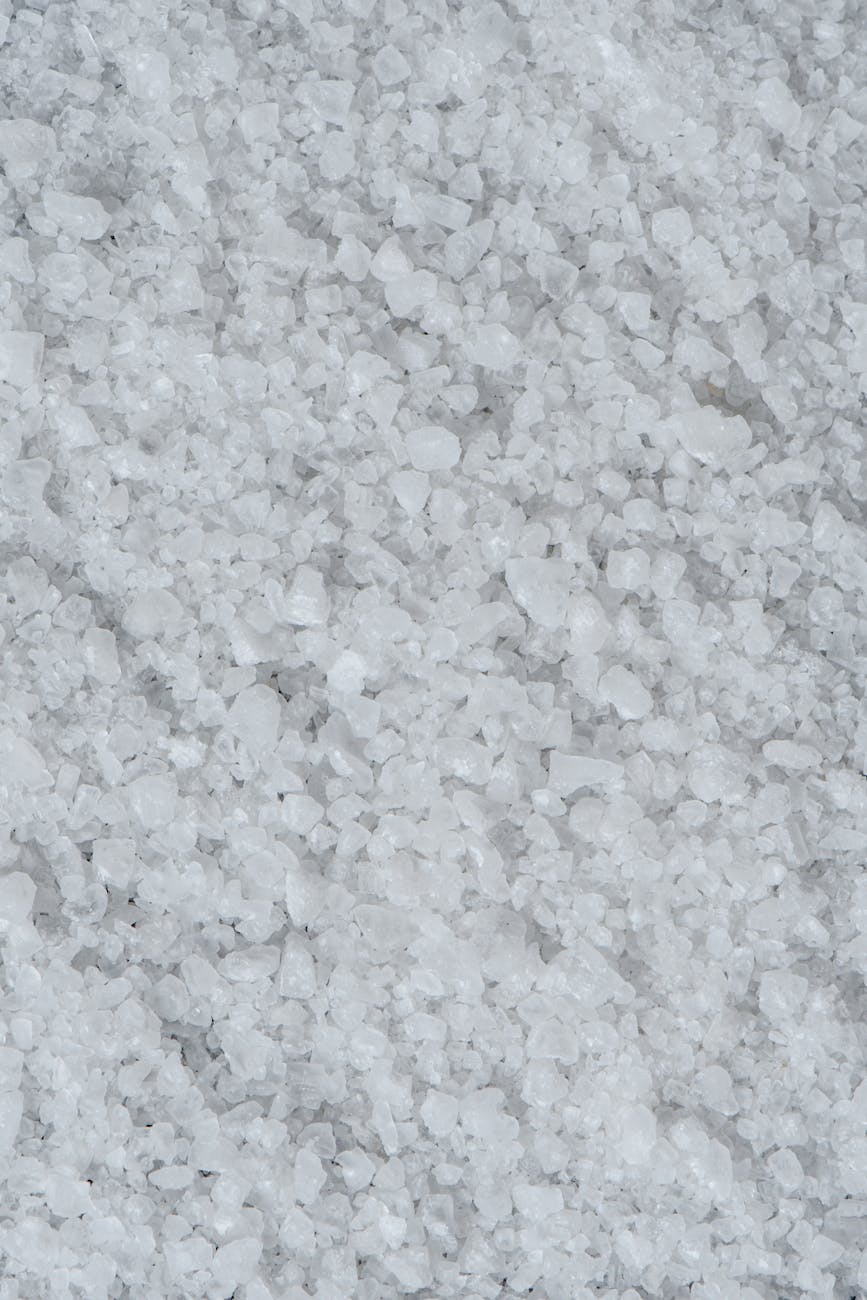
As winter weather sets in, many homeowners reach for rock salt to keep their driveways and walkways clear of ice and snow. However, this common solution can do significant damage to your pavers and concrete surfaces. Here’s why you should reconsider using rock salt and switch to a safer alternative like calcium chloride.
How Rock Salt Damages Concrete and Pavers
Rock salt, or sodium chloride, works by lowering the freezing point of water, which helps to melt ice. However, as the salt melts and refreezes, it can penetrate the porous surface of concrete and pavers. This causes water to expand and contract, leading to cracks, chips, and even structural damage over time. The salt can also leave behind corrosive residues that degrade the surface, making your driveway or patio look worn out and aged more quickly.
Why Calcium Chloride is a Better Option
Calcium chloride is a more effective and safer alternative for de-icing. Unlike rock salt, it works at much lower temperatures, making it ideal for colder climates. Calcium chloride also absorbs moisture from the air, reducing the need for constant application and minimizing the chance of damage to your hardscaping. It doesn’t penetrate concrete as deeply as rock salt, significantly reducing the risk of surface erosion.
Protect Your Investment
If you want to preserve the look and longevity of your pavers and concrete surfaces, consider switching to calcium chloride this winter. It’s less damaging, more efficient, and ultimately saves you money in costly repairs or replacements. By choosing a safer de-icer, you’re not only protecting your home’s exterior but also ensuring it stays beautiful and functional for years to come.
 King Home Inspection Services
Leave a comment